
A Clearer Look at Your Home’s Water: Testing, Filtration, and Everyday Confidence
Most of us don’t give much thought to the water coming from the kitchen tap. We fill a glass, rinse vegetables, start the kettle, and get on with the day.…
Most of us don’t give much thought to the water coming from the kitchen tap. We fill a glass, rinse vegetables, start the kettle, and get on with the day. Then something changes. Perhaps the water tastes slightly different, white marks keep returning to the shower screen, or the washing machine seems to leave mineral residue on freshly washed clothes. It’s easy to dismiss these things as minor annoyances, but they can be useful reasons to take a closer look.
The answer isn’t always an expensive filter or a complicated plumbing upgrade. Sometimes the water simply has a high mineral content. In other cases, a particular contaminant or a problem within the home’s plumbing needs attention. Understanding the difference is what makes a treatment decision worthwhile.
Start With a Better Understanding of Your Water
Water quality varies depending on where the water comes from, how it is treated, and what it passes through before reaching your home. Municipal supplies are generally treated and monitored, while private wells can be affected by local geology, rainfall, nearby land use, and changes in the surrounding environment. Even homes in the same neighborhood may experience different issues because their plumbing systems aren’t identical.
- Protecting Your Home Starts With Small Repairs and Regular Maintenance
- When Hard Water Starts Showing Up in Everyday Life
- Good Water Shouldn’t Be Something You Have to Think About
- My Home Didn’t Feel Clean Until I Tried Professional Cleaning in Dublin
- What Your Tap Water Isn’t Telling You (And Why It Might Be Worth Finding Out)
- When Your Water Comes from the Ground: Living with It, Fixing It, Understanding It
Common signs can provide a starting point. White deposits around faucets often suggest hard water, which contains elevated levels of calcium and magnesium. Orange or reddish stains may be associated with iron, while an unpleasant chlorine taste can affect how appealing drinking water feels. These clues are helpful, but they don’t provide a complete picture of water quality.
This is where in-home water testing can help homeowners make more informed decisions. Depending on the source and the concerns involved, testing may examine hardness, pH, iron, dissolved solids, bacteria, or specific contaminants. The right test depends on the question being asked; a simple hardness check, for instance, cannot establish whether water is free from bacteria or lead.
If your water comes from a municipal supply, reviewing the utility’s published water-quality report is a sensible first step. Private well owners should follow appropriate local testing guidance. For health-related concerns, a certified laboratory may be needed to obtain reliable results.
Why Guessing Can Lead to the Wrong Filter
Walk into a home improvement store or browse water filters online, and you’ll find a remarkable number of choices. Some promise better taste, others focus on sediment, and some are designed to reduce selected dissolved substances. With so many options, it’s tempting to choose the product with the most features or the most impressive packaging.
That approach doesn’t always work. A sediment filter can capture particles, but it isn’t designed to remove every dissolved contaminant. Activated carbon can reduce certain tastes, odors, and compounds, depending on the system, but it shouldn’t be treated as a universal purifier. A water softener addresses hardness rather than every possible water-quality problem.
The sensible approach is to identify the concern before shopping. If the issue is mineral scale, a softener may be appropriate. If drinking water has an unwanted taste, a certified carbon filter may help. When testing identifies a specific contaminant, the chosen system should have documented performance for reducing that substance.
It’s worth asking a simple question before spending money: What exactly is this equipment designed to improve? A clear answer is more valuable than a long list of features.
When Whole-House Filtration Makes Sense
Some water concerns affect the entire property. Sediment may collect in several fixtures, or the incoming water may have characteristics that influence showers, laundry, and appliances throughout the home. In such situations, whole-home filtration systems may be worth considering.
These systems are generally installed where water enters the property, allowing the selected treatment to serve multiple fixtures. Their design depends on the water analysis. A sediment filter may be used to capture particles, while an appropriately selected carbon system can reduce certain tastes and odors. Other treatment stages may be necessary when testing identifies different concerns.
Sizing matters more than many homeowners realize. A system needs to handle the home’s water demand without causing an inconvenient drop in pressure. A household with several bathrooms and frequent simultaneous water use may need a different capacity from a smaller property. Installation space, drainage requirements, replacement parts, and ease of servicing should also be considered.
Whole-house treatment isn’t automatically necessary, though. If the main concern is the taste of drinking water at one kitchen tap, a point-of-use filter may be a simpler and less expensive option. The goal is to treat the water where it needs treatment, rather than install equipment simply because it is available.
Improving Water for Drinking and Cooking
For many households, drinking water is the priority. People want water that tastes pleasant, is convenient to access, and meets the relevant quality standards. Depending on the test results, drinking water filtration may involve a carbon filter, reverse osmosis system, or another technology designed for the specific concern.
Activated carbon is commonly used to reduce chlorine taste and odor, along with certain other compounds. Reverse osmosis uses pressure to move water through a semipermeable membrane, reducing many dissolved substances. The effectiveness of either approach depends on the particular product and the contaminants being targeted.
Before purchasing a system, check its performance documentation and any relevant independent certifications. If you’re concerned about a particular substance, confirm that the model is tested for reducing it. No single filter should be assumed to remove everything.
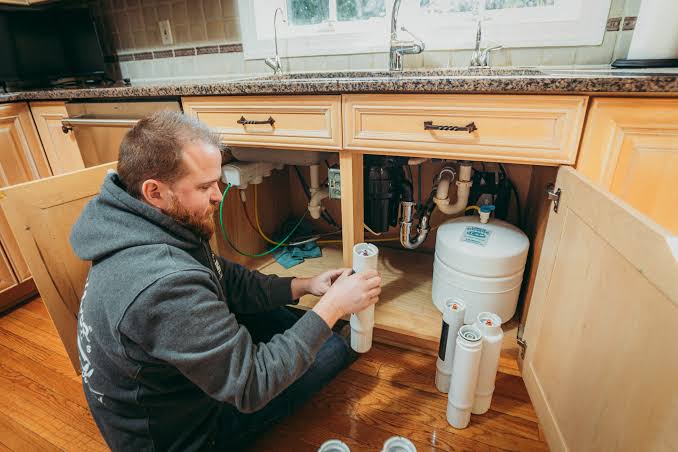
Practical details matter, too. Under-sink units need adequate cabinet space and may require a dedicated faucet, drainage connection, or storage tank. Reverse osmosis systems also produce wastewater and require regular filter and membrane replacement. A system that fits your kitchen and daily routine is more likely to be maintained properly.
Don’t Forget the Cost of Maintenance
The initial price is only one part of owning a water-treatment system. Replacement cartridges, salt for conventional softeners, electricity, water use, and professional servicing can all affect the long-term cost. A less expensive unit may become costly if its replacement parts are difficult to find or its maintenance requirements are demanding.
Before installation, ask for a written estimate and a clear explanation of what’s included. Find out how often components need replacing, whether servicing is available, and which tasks you can safely manage yourself. Keep a record of filter changes and service visits so that routine maintenance doesn’t slip through the cracks.
If water quality changes noticeably after installation, don’t assume the filter simply needs replacing. The source, plumbing, or nature of the problem may have changed, and further testing could be useful.
Choose With Confidence, Not Pressure
Good water management is rarely about buying the biggest system on the market. It’s about understanding the water you have, identifying the concerns that matter, and selecting equipment with verified performance for those needs.
Take time to compare options, ask questions, and understand the costs involved. Be cautious of claims that a single basic test proves your water is dangerous or that one device can solve every problem. Reliable recommendations should explain both the benefits and the limitations.
Water is part of almost everything we do at home. With sensible testing, a well-matched treatment system, and regular maintenance, you can make practical improvements without turning a simple household concern into an unnecessarily complicated project. The best place to start is with clear information and a solution that genuinely fits your home.