
When Your Water Comes from the Ground: Living with It, Fixing It, Understanding It
There’s something deeply satisfying about having your own water source. A well, tucked quietly beneath your property, feels almost like a connection to the land itself. No monthly bills for…
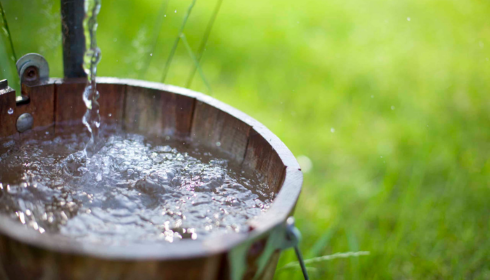
There’s something deeply satisfying about having your own water source. A well, tucked quietly beneath your property, feels almost like a connection to the land itself. No monthly bills for supply, no dependence on city lines — just water, drawn straight from the earth.
But if you’ve lived with well water for a while, you already know… it’s not always as simple as that.
Some days it’s perfectly fine. Other days, it carries a smell you can’t quite ignore. Maybe there’s a metallic taste, or that faint rotten egg odor that lingers longer than you’d like. And while it’s easy to brush it off at first, eventually you start wondering — is this normal?
- When Hard Water Starts Showing Up in Everyday Life
- Good Water Shouldn’t Be Something You Have to Think About
- My Home Didn’t Feel Clean Until I Tried Professional Cleaning in Dublin
- What Your Tap Water Isn’t Telling You (And Why It Might Be Worth Finding Out)
- When You Finally Pay Attention to Your Water, Things Start to Change
- Before You Upgrade Your Water: Why Testing, Installation, and Ongoing Care Matter More Than You Think
The Reality Behind Well Water at Home
Well water isn’t treated the way municipal water is. It doesn’t go through large-scale filtration plants or chemical balancing processes. What you get is what’s naturally present underground — minerals, organic matter, sometimes even bacteria.
That’s not necessarily a bad thing. In fact, many people prefer well water because it feels more “natural.” But natural doesn’t always mean balanced or convenient for daily use.
This is where well water treatment becomes less of an option and more of a necessity. Not because something is dangerously wrong, but because untreated well water often brings along things you’d rather not deal with — staining, odors, and inconsistent quality.
And honestly, it’s rarely about one big issue. It’s usually a mix of small ones, layered together.
That Metallic Taste and Those Rust Stains
If your sinks or toilets have ever developed those orange-brown stains that seem impossible to scrub away completely, you’ve probably encountered iron in your water.
Iron is one of the most common elements found in well water. It’s not harmful in small amounts, but it can be frustrating. Laundry gets discolored. Fixtures lose their shine. And water itself takes on that slightly metallic taste that never quite feels right.
Over time, homeowners start exploring solutions like iron & sulfur removal systems. Not because they want “perfect” water, but because they want their home to feel clean again — visually and practically.
Sulfur, on the other hand, brings a different kind of challenge. That unmistakable rotten egg smell? It’s hard to ignore. And it tends to make its presence known at the worst times — like when you’re hosting guests or trying to enjoy a quiet evening.
Fixing these issues isn’t about luxury. It’s about restoring normalcy.
When Water Smells Like a Swimming Pool
Interestingly, not all water problems come from nature. If you’ve ever switched from well water to a treated supply — or use a combination of both — you might notice a different kind of issue: chlorine.
Now, chlorine is added for a reason. It disinfects water and keeps harmful bacteria at bay. But it also leaves behind a taste and smell that can feel… a bit too chemical.
There was a phase when I couldn’t figure out why my tea tasted slightly off. Not bad, just not right. It turned out to be the water — that subtle chlorine presence affecting everything it touched.
That’s where solutions focused on chlorine taste improvement come into play. Sometimes it’s as simple as a carbon filter, sometimes a more advanced setup. Either way, the goal isn’t to remove safety — it’s to bring back a sense of balance.
Because water shouldn’t compete with the flavors you’re trying to enjoy.
Living with Water You Don’t Have to Think About
What people often underestimate is how much mental space water quality occupies — even if you don’t realize it.
When something’s off, you notice it constantly. You hesitate before drinking from the tap. You double-check how your clothes look after washing. You wonder if guests can smell what you’ve gotten used to.
But when water is right, it disappears into the background. It becomes what it was always meant to be — invisible, reliable, unremarkable in the best way possible.
And that shift, from noticing every flaw to not thinking about it at all, is where real value lies.
There’s No One-Size-Fits-All Fix
If there’s one thing worth keeping in mind, it’s this: every well is different.
Even neighboring properties can have completely different water compositions. One might struggle with iron, another with bacteria, another with high mineral content. So the idea of a universal solution? It doesn’t really hold up.
That’s why testing your water — properly, not just guessing — is so important. It gives you clarity. Helps you avoid overcorrecting or investing in systems that don’t actually address your specific issues.
And once you know what you’re dealing with, the path forward becomes much simpler.
Small Changes That Quietly Improve Everything
What’s interesting is how quickly you adapt once your water improves.
The stains stop appearing, so you stop thinking about them. The smell disappears, and you forget it was ever there. Your coffee tastes better, your showers feel more refreshing — but it doesn’t feel like a dramatic transformation.
It just feels… right.
And maybe that’s the point. Good water doesn’t demand attention. It supports your daily life without asking for recognition.
A More Grounded Way to Look at It
Living with well water is, in a way, a partnership. You rely on it, but you also have to take responsibility for maintaining it. It’s not as hands-off as city water, but it offers a kind of independence that many people value.
And once you understand it — really understand it — it stops feeling like a problem to solve and starts feeling like something you can manage.
Not perfectly. Not all at once. But steadily.
Because at the end of the day, water isn’t just about hydration or cleaning. It’s part of your environment. Your routine. Your comfort.
And when it works the way it should, you barely notice it at all — which, oddly enough, is exactly how you know you’ve gotten it right.